How to Get Ahead on College Applications This Summer
Summer is here, and college apps are right around the corner. Here are a few things you can do over the summer to get ahead and make the application process just a little bit easier.

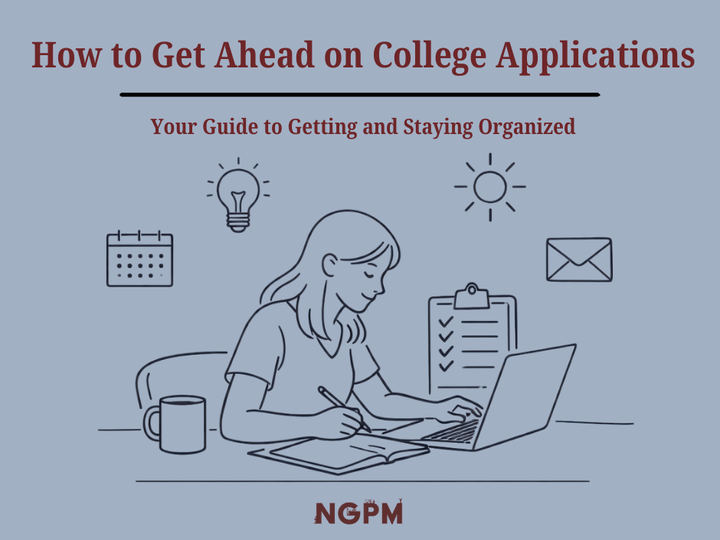
For many rising seniors, summer is one of the best opportunities to get ahead on college applications before school, sports, extracurriculars, and senior year responsibilities start getting busy in the fall.
A lot of people wait until August or September to seriously think about applications, which can quickly become overwhelming. Between essays, recommendation letters, deadlines, transcripts, supplemental essays, and activity lists, it becomes easy to procrastinate or fall behind once school starts again. Experts recommend starting early and creating a clear plan to make the process more manageable.
Here are some of the best ways to get ahead during the summer before senior year.
1. Start brainstorming Common App essay ideas early
One of the biggest mistakes you can make is waiting until the last minute to start your personal statement.
The best essays usually come from reflection over time, not writing everything in one night. During the summer, start thinking about meaningful experiences, challenges, interests, or moments that shaped you.
A strong essay does not need to be about something dramatic or life-changing. Often, the most effective essays are personal, specific, and reflective. Instead of trying to sound impressive, focus on writing something genuine that shows how you think and what matters to you.
Experts also recommend starting essays early in the summer so you have enough time to revise and improve them later instead of rushing through them during the school year. Since many supplemental essays ask similar questions, starting early also gives you time to reuse and adapt ideas instead of rewriting everything from scratch.
2. Organize your activities and accomplishments
Before applications open, it helps to make a master list of:
- extracurricular activities
- leadership positions
- volunteering
- jobs or internships
- research experiences
- awards and honors
You should also write short descriptions of what you actually did and the impact you made. This makes filling out applications much easier later on.
It can also help you recognize patterns in your interests and experiences that you may want to highlight in essays or interviews.
Using the summer to organize activity descriptions ahead of time can significantly reduce stress during senior year.
3. Make a realistic application timeline
College applications become much more manageable when broken into smaller steps.
A good starting point is mapping out important dates like:
- Common App opens August 1
- Early Action/Early Decision deadlines (typically November 1 or November 15)
- Regular Decision deadlines (commonly January 1 or February 1)
- Scholarship deadlines, which can sometimes be earlier than application deadlines
- SAT/ACT test dates if you plan to retake exams in the fall
- Recommendation letter requests, ideally before senior year starts
- Essay drafting and revision goals throughout the summer
You can also create a Common App account before August to explore the platform and get familiar with the application sections ahead of time.
Creating a checklist or spreadsheet with deadlines can help you stay organized and avoid missing important application materials. Setting reminders on a calendar can also make the process easier to manage.
4. Ask for recommendation letters early
Recommendation letters are an important part of many applications, especially for competitive colleges and scholarships.
You should ask teachers, counselors, or mentors who know you well and can speak specifically about your character, work ethic, and growth.
It is also important to ask early. Teachers often receive many requests during the fall, and giving recommenders enough time can lead to stronger, more thoughtful letters.
Asking before senior year starts can also help teachers write more detailed and personalized letters instead of rushed ones during the fall application season.
5. Research colleges more intentionally
Summer is a great time to look deeper into colleges beyond rankings.
You should think about:
- academic programs and majors
- research opportunities
- campus culture
- advising and support systems
- cost and financial aid
- location and environment
If you are interested in medicine, engineering, or research, this is also a good time to look into labs, hospitals, programs, or internship opportunities connected to each school.
Talking to current students can often provide more insight than college websites alone.
6. Prepare for research, volunteering, or summer opportunities
Many students use the summer to get involved in research, volunteering, jobs, shadowing, or academic programs.
These experiences do not need to be extremely prestigious to be valuable. What matters more is showing consistency, curiosity, and initiative.
Even smaller opportunities can become meaningful if you genuinely invest time and effort into them instead of just participating briefly for an application.
7. Build systems before senior year gets busy
Senior year can become hectic very quickly between classes, applications, extracurriculars, and social events.
Simple habits can make the process much more organized later on, including:
- creating folders for applications
- tracking deadlines in a spreadsheet or calendar
- keeping a résumé updated
- setting aside weekly application time
Final thoughts
You do not need to have your entire future figured out during one summer. The goal is simply to reduce stress later by getting organized now.
Even making small progress, whether that’s brainstorming essay ideas, organizing activities, researching colleges, or preparing for opportunities, can make a huge difference once senior year begins.
Every opportunity has the potential to turn into something meaningful, so what matters most is how you choose to approach and grow from those experiences.
In addition to scholarship resources, NGPM also offers one-on-one mentoring for students interested in medicine and healthcare. Mentors can help with college applications, essays, planning extracurricular involvement, and navigating the pre-med path step by step. If you’re interested, we strongly encourage you to apply.
Sources
Cole Claybourn. “4 Tips to Complete College Applications on Time.” U.S. News & World Report, March 12, 2024.
“The Common Application Guide.” The Princeton Review.
“Application Guide for Rising Seniors.” Common App.