What Forbes’ “New Ivies” of 2026 Mean for Future Pre-Med Students
Forbes just released their list of 'new' Ivy universities for 2026. What does this mean for pre-med students in their search for college? Read to find out!

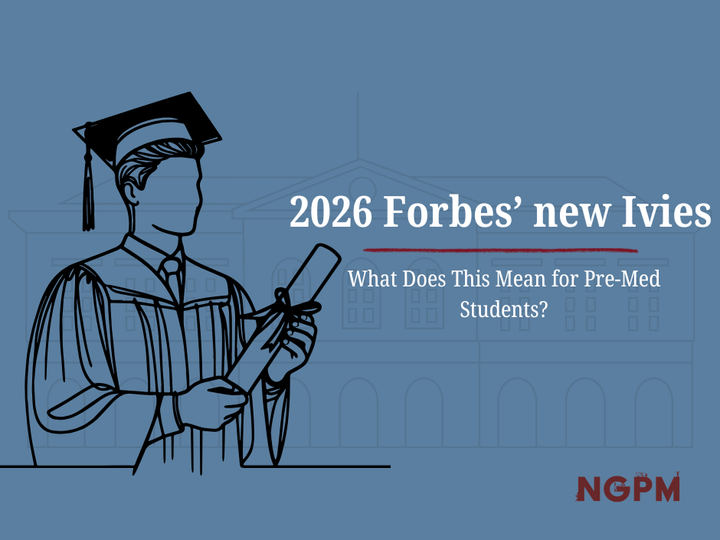
Amid each admissions cycle, attention tends to center on a well-known group of institutions, particularly the Ivy League. With that being said, Forbes recently released a list highlighting an expanded group of universities that they referred to as the “New Ivies.” These schools are gaining recognition for producing outcomes similar to those of the Ivy League in categories such as academic rigor, research output, career placement, and long-term student success.
The list includes a mix of 10 public and 10 private universities
Public Universities:
- University of Florida
- Georgia Institute of Technology
- Purdue University
- United States Air Force Academy
- University of Michigan–Ann Arbor
- University of North Carolina at Chapel Hill
- University of Virginia
- University of Texas at Austin
- University of Wisconsin-Madison
Private Universities:
- Carnegie Mellon University
- Case Western Reserve University
- Emory University
- Georgetown University
- Northwestern University
- Rice University
- Tufts University
- University of Notre Dame
- Vanderbilt University
- Washington University in St. Louis
Why does this list matter for prospective pre-med students?
For students planning to pursue medicine, many of the shared characteristics associated with the “New Ivies” align closely with what strengthens a pre-med experience:
1. They provide strong research opportunities. Many of these schools are strong research institutions, which facilitates the process of finding lab positions and mentors within the school’s faculty.
2. There is greater access to hospitals and clinical experience. Several of the schools on the list either have their own medical center or are located near larger medical systems. This gives students more opportunities for volunteering, shadowing, and other clinical positions.
3. There are established pre-med advising systems. Top-ranked universities normally provide structured advising programs and application support that ensure students stay on track.
At the same time, reputation is only one aspect. While Ivy League schools are associated with prestige and name recognition, the universities listed by Forbes have achieved comparable recognition and reflect a broader range of environments that may better support different types of students.
Many of these schools combine strong academics with larger student bodies, more diverse academic programs, and, in some cases, collaborative or balanced campus culture. For some students, this can lead to a more manageable academic experience, which is especially important in the demanding pre-med track.
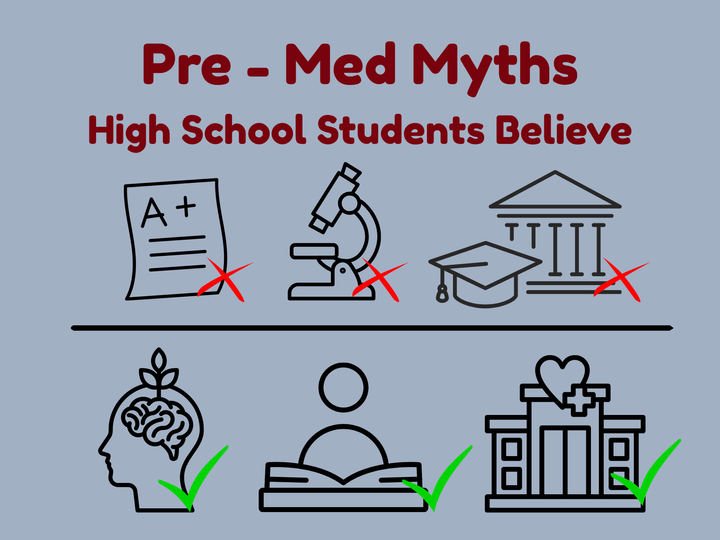
Medical school admissions ultimately focus more on what a student accomplishes, rather than where they do it. Therefore, students should prioritize factors such as:
- Their ability to maintain a strong GPA -
- Access to clinical, service, research, and leadership opportunities that they will realistically pursue
- The level of academic and advising support available.
The rise of the “New Ivies” shows that strong opportunities exist beyond traditional Ivy League schools. However, lists like this are best viewed as a guide rather than a definitive application list. They should be considered alongside factors such as academic fit, cost, and available support systems.
For pre-med students, the best choice is not always the most prestigious option, but the one where you can succeed academically, gain meaningful experiences, and stay motivated over time.
Sources
Alicia Park. “The New Ivies: 20 Great Employer-Friendly Colleges Embracing AI.” Forbes, April 2026.
Salah Eldin Kassab et al. “The impact of the educational environment on student engagement and academic performance in health professions education.” BMC Medical Education, November 2024.
Kathleen Franco, MD, MS. “Medical Schools Don’t Care Much Where Applicants Went to College.” U.S. News & World Report, April 2020.